
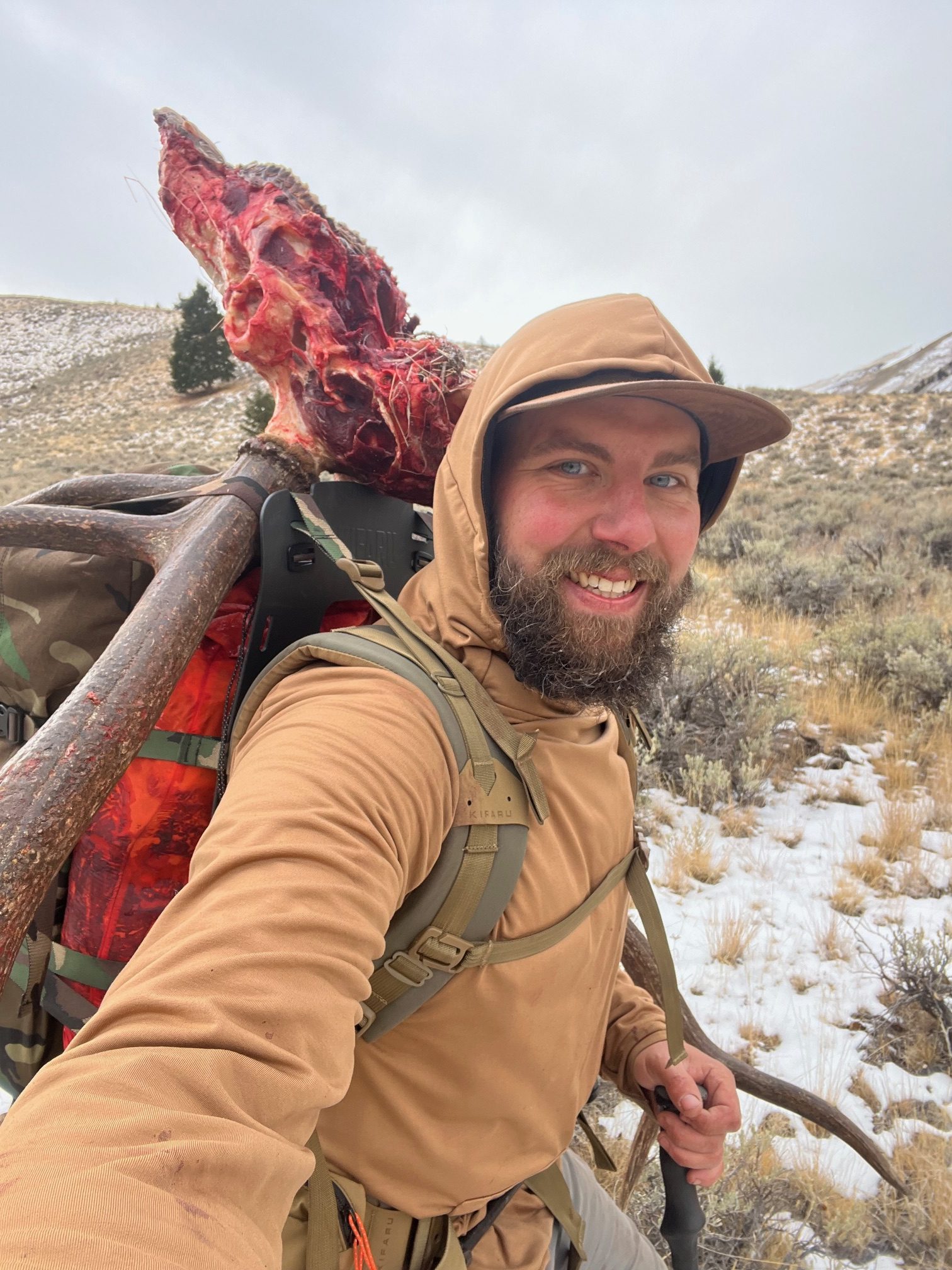
I started this all about 6 years ago in an effort to make a pack that didn’t exist. Well at least a pack that did not exist in the hunting space. I wanted the pack that had the basic backpacking layout that has become standard across that industry, but I wanted it with a frame capable of 100+ pound loads that spanned double digit miles per day comfortably.
I already had frames that would do it, so I decided to make a bag like I wanted. Fast forward about 75 iterations of design and a fleet of sewing machines later and here we are. The layout which I am referring to is the one with a stretch mesh pocket on the face and a water bottle pocket on each side. These are often roll tops but sometimes panel loaders as well.
What I didn’t anticipate is how long it would take me to get all the little things right. I didn’t expect to go through 10+ companies to get the webbing with just the right texture or hand feel. I didn’t expect to make dozens of revisions to my bottle pockets to get the volume perfect. But here I am.
I also didn’t expect to stumble into so many ways to make a better pack along the way. When you really dive into it there’s far better seaming techniques, materials, and ways to make a pack than what is currently done. Its being done for decent reasons often, like the ease of manufacturing being increased a lot for a product that’s still good enough. But I none the less learned that I could build a lighter, stronger, more durable pack from better materials.
I was drawn to this style of backpacking pack because of how I hunt. They say styles make fights and I believe the same applies to hunting. The way I approach things deserves credit for much of my success, and I approach hunting as backpacker. I’m not someone who packs in and sets up their tipi shaped hot tent and titanium wood stove and hunts out of it in a central location for a week. If that’s your thing, go for it, but its not mine.
I’m a guy that wants to move every day until i find a specific animal. This typically means waking up in the morning and packing up before daylight so I’m ready. Then I will glass through the morning, hike through the mid-day, glass in the evening, and then finally get my gear back out at dark in tomorrow mornings glassing location. This means a pack with the days needs on the outside, and the sleeping gear and extra food/clothing on the inside.
Backpacking packs excel at this because they assume you’re either walking or camping.
So I set out to build my perfect pack. I needed a stretchy mesh pocket to keep some small items, snacks, and to easily and quickly stash jackets in. Bottle pockets were next sized to hold smart water bottles and a tripod, as well as occasionally a tent in the late season. I far prefer a tarp if it isn’t snowing, but either way I like my shelter accessible without breaking down my pack.
I’ve always kept my food as the top most bag in my pack so if I want more I don’t have to unpack much to get to it. Much like my food bag is a roll top for a reason, a backpacking benefits from the same reality. The largest volume of any pack is food, and it is also the most inconsistent depending on how many days you have left. The roll top solves this volume issue allowing a clean riding pack without a bunch of slop. Slop is often solved with extra compression, but that’s the quickest and easiest way to add weight to a pack.
Finally a top y-strap helps to control the load and provides an optimal point on the safest area of the pack for my spotting scope to ride. So in summary with this layout I now have my water, jacket, snacks, tarp/shelter, tripod, and spotter all with a place to live on the outside of the pack while the rest of my food is the first thing to access inside.
The next thing i wanted was a sub 1 lb bag. This was a material problem at first. After a couple years I came into contact with some Challenge ultra and i knew it had the potential to get me there. That fall I built a 12 ounce bag and proceeded to kill and move a pretty good bull 7 miles to my truck with it solo.
It was starting to come together but there was one problem… I didn’t enjoy loading the rolltop through a 12″ collar and down 25″ frame. I couldn’t reach the bottom of the pack. So I went back to a panel loader design for a couple years and just added 500 cu in to the bag for extra food space.
Then one day it hit me on how I wanted the roll top to open while still maintaining all the other elements. Its a simple idea, but the geometry finally clicked in my head while sitting on the couch one morning.
So now here we are, on launch day. I’ve known for a long time I loved to hunt the wilderness. What I didn’t know when I picked up my first sewing machine during the Covid-19 pandemic is just how much I would also love pushing the envelope of what can be done with the gear to do that hunting with.
There’s much more to come, but in short that’s why I’m here.
2 responses to “Mighty Mouse Mountainwerks- How I Got Here”
This is awesome! Will you have any videos showing more detail of the packs? Like how they work with other frames and how to haul meat with them?
Definitely. At one point in time I was chasing having every piece of content done and in place on here, and then I realized that list would be never ending. I needed to get a functional site together to get the ball rolling to where I can start to fill in the gaps. I have a couple packs in the process of being built right now which will allow me take photos of more of the options and film some videos. Thanks for the comment.